Published On: August 27, 2020

Guaranty Bank & Trust Lays the Foundation for Lasting Roots in Grenada

Local Mississippi bank brand reinvests in community by developing and upgrading land for new branch location

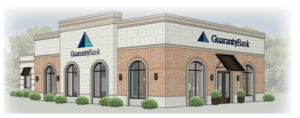
Grenada, MS – Wednesday, August 5, 2020 – Citizens of Grenada are noticing some big changes along Sunset drive. The ground is moving to make way for a beautiful new branch for Guaranty Bank & Trust Company on a plot of land previously unusable for local businesses in the area.

The bank is showing its commitment to the Grenada community by taking on the monumental task of building what will become a new business corridor for Grenada. Working with MDOT and local officials, Guaranty Bank is investing in developing the land in a location previously known primarily for its tree cover and runoff.

Guaranty Bank’s CEO Hue Townsend says, “Since opening our doors in the fall of 2016, the Grenada community has been good to us. So good, that we need more space to serve our customers than our current retail location has to offer. We are getting creative with our new build-out and will be able to provide the latest in banking technology to each of you.”

Choosing a property that needed a lot of investment took a lot of foresight. President Brad Branscome says, “We’re bringing more than a bank branch to the location. We’re investing in the Grenada community for today and for tomorrow. By solving some long-standing drainage issues, we’re developing land that will be usable and available for future business growth.”

This is a good news story for Grenada. Not only will the land pave the way for future business, the construction is an economic boon to Grenada in these challenging times. Branscome says, “From the project engineer to site contractor, businesses to building contractor, everyone working to make this branch a reality are local to the Grenada community. All investment dollars for this project are staying right here at home.”

Building construction is expected to begin mid-August with a branch opening slated for the spring of 2021.

About Guaranty Founded in 1943, Guaranty Bank is a locally owned and operated financial services provider to Mississippi and the surrounding areas. With more than 20 branches, the bank has grown from humble beginnings to offer high-level consultation and a comprehensive suite of banking products and services, rivaling even the biggest of banks. Guaranty Bank demonstrates its commitment to the communities it serves through economic development activities and the meaningful actions and involvement of its employees.

Press Contact:
Myra Dunlap
Senior Vice President
Phone  662-247-1454
mdunlap@gbtonline.com

Published On: August 17, 2020

Should I Set Up Direct Deposit?

Understanding what direct deposit is, how it is set up and the many benefits can help you decide whether it is the right option for you.

What is direct deposit?

Direct deposit is money being transferred from one bank to another without the use of paper checks or cash. Employers offer this service or benefit to save their employees a trip to the bank to deposit paychecks.  Federal agencies also utilize direct deposit for distributing benefits like social security or other programs.

The benefits of direct deposit are numerous:

  • Speed.  With direct deposit, your paycheck is deposited automatically into your designated account and accessible as soon as the bank “clears” it for use. You do not have to wait for the check to be physically given to you at work or mailed out. Time and money are saved as you are not required to visit your bank each pay cycle.
  • Security.  Funds go directly to your bank via an electronic transfer, there is no risk of losing a check or having it stolen.
  • Savings.  Paychecks can be automatically dispersed across multiple accounts. That means, in addition to the saving of time and gas to get to the bank, you can automatically have money transferred into a savings account to help you build a “rainy day fund” or save for the future.

How to get started

Direct deposit is often a free service provided by banks and credit unions. Implementing the service is simple and easy at Guaranty Bank.  You will need to follow the following steps below to set up Direct Deposit to your Guaranty Bank account.

Step 1 — Download the Direct Deposit form to your computer. Note: You will need the Adobe Acrobat Reader installed to open the PDF file.

Step 2 — Fill in the form accurately with both your employer and bank information.

Step 3 — Print the form.

Step 4 — Submit the Direct Deposit form and a voided check to your employer’s payroll or accounting department.

Step 5 — Work with your employer to determine if you are eligible for direct deposits.

Step 6 — Once confirmed, check your account balance on payday by logging into mobile or online banking.

Now you are set to complete forms with your employer or federal agency that will be using direct deposit to put money into your account. Some employers or agencies require a voided check to be attached to the firm to help them verify the information has been correctly submitted.

Remember, you can designate the type of account (checking or savings), select the amount or a percentage to each account

What to look out for

There are few if any disadvantages of direct deposit. You can get paid faster, and funds are readily accessible without having to wait for the mail or go to the bank. But, while the process happens automatically, it’s still important to monitor that your pay stubs match the accounts and make sure deposits are being made regularly and in the right amount. With the ease of having your money deposited, it is easy to not pay close attention and to let errors slip by accident.

The process of transitioning to direct deposit may take just a few days or it may take a few check transactions to be finalized depending on your employer’s policies. Once this is setup you have a secure and convenient way of getting paid and accessing your money faster and easier than with a traditional paycheck deposit.

Published On: August 7, 2020

Guaranty Bank Donates $50,000 To Mississippi Children’s Promise Program

BELZONI – Hue Townsend, CEO and President of Guaranty Bank & Trust Company, today announced that the bank has contributed $50,000 to the Children’s Promise Program,  The program was enacted by the Mississippi Legislature during its 2019 regular session and provides for the benefit of at-risk children across the state.

In part, funds may be disbursed within the Department of Child Protection Services and for the safety, care and well-being of children in custody within that Department. The act also provides for creating permanency for children through adoption to assist in the placing of children in foster care, along with children who have chronic illnesses or physical, intellectual, developmental or emotional disabilities. In addition, it helps provide funding for children eligible for free or reduced-price mean programs.

Wendy Lester, Assistant Vice President and Manager of the bank’s Senatobia Office, was joined by Senatobia Branch President Chuck Jackson, in presenting the check to Dr. Marvin W. Lishman, Headmaster of Magnolia Heights Academy, on August 3.

“The future of Mississippi is only as strong as the education and abilities of younger generations,”  Townsend said. “We consider it our corporate privilege to help fund the Children’s Promise Program in the certain knowledge that many children will benefit from stronger adoption opportunities, meal programs and other initiatives of the Act. This donation also reflects our role as a true community bank across the region and our commitment to the communities we serve.”

Press Contact:

Diédre Barret
SVP – Marketing
662.247.5134 Office
210 N. Hayden Street
Belzoni, MS 39028
dbarret@gbtonline.com

Published On: July 30, 2020

3 Reasons Your Business Needs a Commercial Bank Account

When it comes to business, it is a good rule of practice to separate aspects that are professional from those that are personal. While that is not always possible, it is a must-do for finances. Establishing a commercial bank account for your business is a good first step. Here we look at the reasons why.

First: What is a commercial bank account?

A commercial bank account is basically any type of financial account that a business or corporation uses. These can be savings accounts, checking accounts, and merchant accounts. Instead of earning interest on these accounts, businesses get earnings credits, which are based on the average account balance. While personal checking accounts are often free, business accounts typically are charged a monthly service fee. In addition, interest rates on commercial bank accounts may be lower than what you might find with a personal account. Still, by opening a commercial bank account your business can achieve three important goals.

Manage your everyday finances

A commercial bank account provides a means to manage your business finances separately from your personal ones. This is important for your overall business accounting. It can also make processes easier at tax time and can reduce your personal liability on the account.

A commercial bank account often has features like online banking and mobile banking. This gives you the ability to view banking account balances, transfer balances, and pay bills directly from your computer, smartphone or tablet.

Another everyday transaction that a commercial bank account can help with involves credit card processing. If your business accepts credit cards for payment, a merchant bank account can be used to front your business the proceeds from credit card payments before the charges are, actually, processed through the card issuer.

Set your business up for operations and growth

A commercial bank account can also give you access to other banking products that can help your business thrive. These can include:

Provide access to your employees

Finally, a commercial bank account expands access to your finances to your designated employees. This means you can get support with depositing funds, making payments, and managing accounts. This can be imperative as your business grows and you need more people to take on management and accounting tasks.

At Guaranty Bank, we are happy to always answer any questions that you may have about any and all account options. Contact one of our local branches to schedule an appointment. to schedule an appointment!

Published On: July 9, 2020

Does Your Business Need a Business Savings Account?

Does Your Business Need a Business Savings Account?

When it comes to your business, the thought of holding funds back for savings may seem like a luxury you simply cannot afford. But, establishing a business savings account is a smart strategy. This is smart for not only building a solid foundation, but also fueling your business for growth. Here we look at the benefits of saving, and what to look for in a business savings account.

Why save?

Savings for businesses provide the same benefit as personal savings – they can tide you over in the case of emergencies. A well-funded savings account provides a liquid asset you can draw from during downtimes and to insulate your business to cover unexpected costs. In addition, a business savings account can provide other benefits you might not have considered.

 For starters, it can position your business for growth. To take advantage of new opportunities, businesses must think big, with long-term plans and projects. They need to think past immediate expenses and have a vision for where they want to be 10, 20, or 30 years from now. To be ready for this type of growth, a robust savings account is needed. A lot of businesses are only able to forecast weeks or a few months into the future based on limited resources. With money in savings, you can look well ahead and be ready to act on opportunities your competitors may not be able to.

Also, when lean times hit, many businesses will falter, and that makes them an ideal target for acquisition. If you have invested in a business savings account, your business will not only thrive through financial hardships, you will also be in a position to grow your business by acquiring struggling ones. You can turn competitors into a growth platform, acquiring companies, product knowledge, and intellectual property. And, being able to withstand and continue to thrive through financial difficulties adds to your value and your business reputation.

Having funds in savings can bolster longevity, which looks good to potential funders. This means when you are ready to act on opportunities, you may be more likely to get additional financing through a commercial lender.

Another benefit is that an ample business savings account gives you the financial ability to give back to your community in the form of donations, sponsorships, and partnerships. This can position your business favorably in the eyes of staff, clients, and customers. It can also help you develop your brand of being generous, responsive, and community-minded.

What to look for in a business savings account

If you are ready to take the next step and open an account, there are several features to consider:

Incentives. Although it’s important to pick an overall banking partner you trust, there is a lot to be said for banks that want to earn your business and incent you to come on board with them. To that end, check online for local banks advertising cash bonuses or incentives.

Monthly fees. Review the terms and conditions thoroughly and make sure you have a solid understanding of the account. Avoid accounts that come with monthly fees or that charge for too many withdrawals, having too low of an account balance, or for transferring funds between accounts.

High-yield interest rate. You’ll want to look for a business savings account with a high annual percentage yield, which determines how much interest your savings will accumulate. Guaranty Bank Savings accounts offer monthly compounding interest if the account has the minimum balance available.

Minimum account opening deposit. Guaranty Bank has a couple of options, the Guaranty Prime Investment Account has a $20,000 minimum opening deposit and the Commercial Money Market has a $1,000 minimum opening deposit.

Minimum balance requirements. Based on the type of account you choose there is a minimum balance in order to avoid the monthly maintenance fee at Guaranty Bank.

Maximum withdrawals. The purpose of a savings account is to save. Based on this, depending on the type of account you have there is a limit to the number of withdrawals you can make on a monthly basis before extra fees kick in. Before you open a savings account, have a realistic idea about when and how often you may need to access it. If you plan on accessing savings from an ATM, make sure you have that option and remember, many Guaranty Bank does not charge fees for using their own bank ATMs.

Wire transfers. Another service to look for in a business savings account is the ability to send and receive wire transfers, including international transfers. Some banks may offer a certain number of free transfers every month, but then charge an additional fee. If you plan to fuel your account with regular wire transfers, this is an important feature to ask about.

Online banking. A final thing to consider is the ease and access to online banking. This is especially important if you’ll also be opening a business checking account where you’ll want to go online regularly and pay bills, transfer funds, or check your account balance. Online banking gives you visibility into your account wherever you have an Internet connection. Some banks also offer a mobile app that can make the online banking experiences even more conducive for accessing information on your phone. While this kind of ready access is not necessarily a must for a business savings account, it can be helpful if you have remote business partners who share your accounts or business locations that are far from your physical bank.

Saving is always a good thing, and that is exceptionally true for business owners. A robust business savings account and plan can be an essential tool for getting your business through lean times and positioning it for future growth. The trick is knowing what to look for, reading the fine print, and making sure you are investing in the right account for your operations.

At Guaranty Bank, we want managing your money to be as simple as possible. Please reach out to your local banker if you haven’t taken advantage of any of these services that we offer yet and would like more information.


Published On: June 24, 2020

Nationwide Coin Shortage

On June 15, the Federal Reserve announced a temporary coin shortage due to the COVID-19 pandemic. This shortage is due to a change in the normal circulation of coins.  The country saw an almost overnight switch to contactless payments by businesses.  Other businesses that deal with physical cash, such as restaurants, who would deposit their earnings at banks, were shut down due to the pandemic.  The regular flow of coins was due partially to the change in business payments, temporary business shut downs and the decreased production by the U.S. mints as the U.S. mints reduced staffing during this time.

The Federal Reserve anticipates that the coin inventory will fix itself, once businesses resume usual operations and the coin circulation returns to normal.  In the meantime, the Federal Reserve will allocate coins for each financial institutions based on historical usage.  The Federal Reserve will continue to review limits based on national receipt levels, inventories and Mint production.

Guaranty Bank will continue to monitor the coin shortage situation and the correspondence from the Federal Reserve.  We will provide updates when new information is available.

Thank you for choosing Guaranty Bank.

Published On: June 22, 2020

Which IRA Savings Account Should I Choose?

As you begin retirement planning, a term you may hear more and more is Individual Retirement Account or IRA. As you learn about the types of IRA savings accounts that are out there and their competing rates and terms, it can be easy to feel overwhelmed. This overview outlines the key features to help you choose the one that is right for you.

 What is an IRA?

An IRA is an investment account specifically designed to save for retirement. By opening an IRA you can invest in stocks, bonds and other assets. The amount you invest, known as your contribution, can help to reduce from your income tax in the current tax year, but you will pay taxes on it when you withdraw the money during retirement.

There are four common types of IRA savings accounts:

  • Traditional IRA. With a traditional IRA, the amount you invest is deducted from your paycheck before taxes are taken out, so your current year taxable income is less. Your money grows in the IRA un-taxed until you withdraw the funds from your account at the specified time. Anyone can open a traditional IRA, but the amount you can defer on your taxes can vary based on your age and other deductions.
  • ROTH IRA. Roth IRAs differ from traditional IRAs in that the tax benefits are reversed. Contributions are taxed before you invest instead of when you withdraw the money in retirement. The tax penalty should be less when you withdraw funds later in life. This applies to both the amount of our contribution and the interest earned. Also, with a ROTH IRA, you can take money out at any time without penalty. But, like a traditional IRA, there are federal contribution limits as to how much you can sock away.
  • SEP IRA. A simplified employee pension is a retirement tool for small business owners or people who are self-employed. These are like a traditional IRA in that contributions are not taxed. The savings grow tax-deferred, and money is not taxed until you withdraw it at retirement. Advantages of a SEP IRA are that they are relatively easy to set up and administer, while they allow for a much larger contribution.
  • SIMPLE IRA. Finally, a Simple IRA is a retirement savings account designed for small companies with 100 or fewer employees. It stands for Savings Incentive Match Plan for Employees. It is known as the small company version of a 401(k), but it works much like a traditional IRA.

How to choose

An IRA is not an investment. Rather it is an account from which investments are made. Thus, choosing the best IRA savings option depends on how you want to manage those investments. Guaranty Wealth Advisory provides self-directed investment accounts.

There are also IRA brokers, ranging from traditional or “retail” brokerage firms to discount brokers. Traditional firms can walk you through a process of setting up an IRA online with investment advisors on hand to answer any questions, or they can provide a more personal service where they help you choose investments for your situation. And there are brokerage firms that handle the entire process for you as a part of managing your entire investment portfolio.

Discount brokers can also help you through the process, but they call for the client to do much of the upfront research and analysis. Discount brokers also may hold seminars and webinars to share investment tips and strategies.

Another service that is becoming increasingly popular are robo-advisors. These are low-cost digital platforms that provide automated investment services that are driven my algorithms that help you make risk-appropriate investments based on the size of your IRA.

After you decide on an IRA provider, the setup process is pretty straightforward. Most providers will ask for your name, social security number, birth date, contact information, and employment details. From there, you make your initial contribution to open the IRA account.

Next steps

An IRA savings account is an effective and tax-advantaged tool that can be an essential part of your retirement plan. For more information about opening an account, contact your local banker and ask about IRA options that are right for you. Whether with a traditional or Roth IRA, or a plan offered through your employer, you can save on taxes and find a powerful way to save for retirement.

Published On: June 10, 2020

5 Steps to Choosing the Right Home Loan

Buying a home is one of the biggest financial moves people make, both in lifestyle and long-term financial planning. And one of the most important steps in buying a home is getting the right home loan. Taking these five steps can help ensure you make a great decision.

Know what’s out there

There are many different mortgage options available, and they vary in terms of loan type, interest rate, and the length of the loan.

Conventional loans come directly from a financial institution. Federal Housing Administration loans or FHA loans are available for people with lower credit scores and often require a smaller down payment. There are also loans available through programs like the Veterans Administration or the U.S. Department of Agriculture.

Loans also feature either adjustable interest rate or a fixed interest rate. An adjustable interest rate mortgage can be low initially, but can fluctuate throughout the course of the loan, so your mortgage payment can go up or down regularly. With a fixed rate mortgage, you “lock in” at a specific rate and your payments stay the same for the life of the loan. The life of the loan is known as the loan term, which typically is 15 years or 30 years. A 15-year mortgage allows you to pay the loan off sooner, but your monthly payment will be higher than with a 30-year mortgage. A 30-year mortgage will offer lower monthly payments, but you pay more interest on the loan over time.

Keep in mind that with any loan you choose you will likely have opportunities to refinance as the market interest rates and the value of your home change. Mortgages with adjustable interest rates can be converted to fixed interest rates, and vice versa. The term of the loan can also be changed when you refinance. Interest rates may drop throughout the course of the loan you can refinance to create lower monthly payments, if it makes financial sense.

Assess your own situation

Once you understand your options, the next step is to consider your current situation and what factors will impact your home loan decision, both personally and financially. Where are you in your career path? How long do you plan to be in the home you buy? Are you in a position to make a regular mortgage payment? How much do you have in additional debt, and how is your credit?

These questions can help you determine how much money you want to borrow for a home loan, and how much you will qualify for from lenders.

Compare apples to apples

As you are considering loan options, make sure you look at all parts of the loan holistically. There are obvious things to compare: The type of loan, interest rate, and loan term. But there are other factors that can add to or take away from the overall offer. For example, points are fees that you pay up front when you get your loan to lower the interest rate and decrease payments over the course of the loan.

Loans also come with closing costs, which vary based on your lender and where you live. Closing costs generally are a percentage of your loan amount, and cover costs associated with the loan application or origination fee, loan underwriting fee, home appraisal fee, title insurance, yield-spread premium, and credit report fee.

There is also the cost of private mortgage insurance (known as PMI), which is mandatory on a mortgage unless you have more than 20% of the down payment. Mortgage insurance is required and must paid until you have enough 20% equity in the home. This insurance protects the bank’s portion of the loan if for any reason you are not able to pay the mortgage.

When evaluating your options, it’s important to have a solid understanding of what each bank is offering. Then knowing how it will impact not only what’s due at signing, but also your monthly payment. Mortgage lenders are required to provide a loan estimate after they receive your application, and this form lists details on the interest rate, payments, and monthly closing costs. All lenders must use the same form, which can help. Still, savings in one area can show up as an expense in another area. Reviewing all your loan options carefully is an essential step.

Get excited

Once you decide on the ideal home loan and lender, you can move to next steps on the path to home ownership. This can involve getting pre-approvals on a loan or moving on to accepting a loan offer. From there it can take 30 to 45 days for a loan to close. At that point, you go to the loan closing, where you review and sign all the home loan documents. This can be daunting, but exciting. The loan will be officially in effect, but you can feel confident that you chose a good product from a quality institution. Now it’s time to move in and unpack!

Buying a home or investing in real estate can be a smart financial move. Still it is one of the biggest most important financial decisions people can make. By investing in the right home loan, you can make the most of your money and earn equity that can provide big payoffs down the road.

At Guaranty Bank, we are happy to always answer any questions that you may have about buying a new home and taking out a mortgage. Contact one of our Mortgage Loan Officers to schedule an appointment!

Link Disclaimer

The link you are attempting to follow is outside our domain. We do not provide, and are not responsible for, the product, service, or overall website content available at any third-party website that is linked through this browser.

If you agree to these terms select 'Continue' below. If you disagree please click 'Cancel' and this box will close.

continue